Tamron 70200mm 28 Di Sp Vc Usd Review
Disclaimer: The review copy of the lens that I used for this review was provided by Tamron Canada (thanks!) but I am receiving no form of bounty for this review and they stressed that they were interested but in my objective impressions of the lens.
Introductory Thoughts:
I have been interested in trying this lens e'er since it was announced. Every bit many of you know, I am a big fan of Tamron's contempo 24-70mm f/two.eight VC lens, and the thought of a matching lens in this incredibly useful focal length was exciting. I owned Tamron'south previous seventy-200mm f/2.8 lens for a while, and, while I loved the focal length and image quality of the lens, the auto focus was merely not fast enough to use in effect work. I eventually allow it go and recently take covered that focal length with primes when in lower light and Catechism's excellent 70-300L when outdoors.
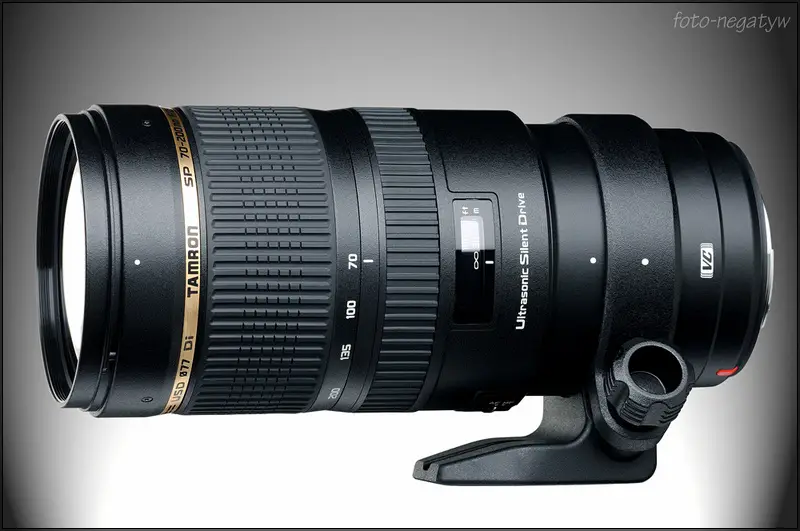
This new lens is reputed to not but upward the ante optically over the erstwhile lens simply also better the autofocus issues with Tamron's new USD (Ultrasonic Silent Drive) motor and add together the very important element of image stabilization (Vibration Bounty or VC in Tamron speak). The resulting lens is the Tamron 70-200mm f/2.viii Di VC USD lens. Tamron also claims that this lens is the smallest and lightest in its class while having a pro level build quality (including weather sealing). This claim is a wee bit disingenuous, as while it is lighter than, say, the Canon 70-200 f/2.8L II lens, it is a full of .7 oz (20 grams) lighter and is actually over v oz (150 grams) more than the lens that it replaces. It should likewise exist noted that it is slightly heavier than Sigma's contempo stabilized offer. It is also the shortest lens in the grade, but again that is only by .4 of an inch (roughly 11mm). I bring this upwards merely to say that while "smallest" and "lightest" in class sounds bang-up for marketing, these minute differences are probably not the primary reasons to buy the lens every bit they will be next to negligible in the field. Fortunately this lens has much more up its sleeve than this marketing hyperbole.
Outset Impressions
I was thrilled to have an opportunity to test this lens. That being said, as always I will strive to requite you my unvarnished stance of the gear, both good and bad. I don't own stock in Tamron (although possibly I should!)
The lens feels great in the manus. The build quality is very close to the excellent levels of the Canon MKII, which is to say splendid! Solid and dense, but not as heavy equally I anticipated. Over a week and a one-half of heavy use (at least a k shots) I never felt like I had an upshot handholding the lens. I am primarily a handheld shooter, then I quickly remove the tripod collar from any lens unless I am really using a tripod. The reduced weight is very welcome. If y'all are shooting on a tripod, though, any lens that comes with a collar does then for a reason. Y'all volition salvage yourself a lot of grief by using it! At one point during the wedding ceremony shoot I had the lens mounted on the Canon EOS 6D full frame body with a Canon 580EXII mounted on summit…and that is a heavy combination. I am accustomed to using pro lenses, however, and I did not find the weight overly cumbersome. I utilize Canon 6D bodies primarily, and I did observe the lens a little front heavy on this body. The residual signal with the 24-seventy VC is perfect on the 6D, but I experience similar the balance with the 70-200 would be improve either with a bombardment grip or a larger torso. I certainly adapted to the balance over the period of the trial, just I practice feel those with either a grip or a 5D MKIII or larger trunk will probably observe the balance more than pleasing.
There seems to be a trend recently to reverse the order of the zoom and focus rings, and this lens is no exception. This is non my personal lodge of preference, only once more it is something that y'all quickly conform to. This lens is internally zooming (as are all lenses in this class), so I was surprised by the amount of resistance in the focus ring. It was a scrap stiffer than what I was accepted to with this mode of lens. Over that brusk menstruation, I can't say whether this is by design, copy specific, or whether it might loosen up some over time. Others accept expressed a similar sentiment regarding the Catechism equivalent, besides. It isn't then shine as, say, the Canon lxx-200mm f/4L IS.
The build quality feels very good. There is a rubber gasket at the lens mount that is the primary external bear witness of the weather condition sealing on the lens. The materials feel good to my bear upon and I personally adopt the more traditional shape of the new lens to the older one that seemed to "grow" the farther you got from the camera body.
More important, however, is the improver of two very important features: VC (Vibration Compensation) and USD (Ultrasonic Silent Drive). Despite a fast (for a zoom) maximum aperture of f/two.viii beyond the focal length, image stabilization of some kind is incredibly helpful for several reasons. Beginning, of course, is the power to handhold lower shutter speeds. If you take a stationary subject, this enables yous to shoot at very low shutter speeds (I have a high keeper rate at 1/15th 2d even at 200mm). Tamron claims a 4 cease advantage, and this proves virtually accurate in the field. Tamron's VC system is typically well behaved and is very tranquility in functioning (different, say, the Canon lxx-200 f/4L IS, which sounds like the barrel is full of angry bees.) Under normal operation the Tamron VC arrangement is both more constructive and quieter than rival systems in my feel (this is the quaternary lens that I accept used sporting Tamron's VC). Unfortunately I did experience some field issues with the VC system on occasion where the VC would brand the epitome rock slightly on the Y axis. This problem was intermittent and others could non replicate this issue, nor have I heard complaints from others reporting a similar result, so information technology was almost likely the result of a particularly hard knock in transit to me. That brings me to another point: i sure advantage of buying a Tamron lens is the six year warranty (Canon'southward warranty is 1 year). I accept had excellent experiences in the by dealing with Tamron's warranty service and feel that any kind of unique result with a lens is probable to manifest during that period.
My chief use of a lens like this is for event/nuptials work forth with portraiture. In either case I am not going to exist using very low shutter speeds considering my subjects are not staying still. I typically use a minimum of ane/160th of a second for event work and prefer 1/200thursday or 1/250th. Having image stabilization is still nice even at these shutter speeds for two reasons: 1) It provides a still image in the viewfinder which allows for more authentic composition and more than finite focus and two) Even at faster shutter speeds my keeper rate is still slightly college because I am eliminating whatsoever camera shake from the equation. Having used both of Tamron's 70-200mm f/2.8 lenses, I tin safely say that the new lens is past far my preferred tool for my kind of work.
The second new feature is equally if not more important: the Ultrasonic Silent Drive (USD). Tamron's previous offer had very fine image quality simply was at times painfully slow to focus. Information technology was usable if making only fine adjustments, merely major adjustments meant missed shots. It was unusable for critical event work. This new lens does a nifty task of solving that problem. The biggest compliment that I can pay to information technology is that I chop-chop stopped noticing the AF; I simply focused. It is not the accented fastest lens that I have ever used, but information technology is very fast. Information technology would exist fifty-fifty faster if not for an occasional split up second fine tuning before final lock. I would have no hesitation using this lens for disquisitional result piece of work (I did, in fact). Also very important is the ability to grasp the transmission focal band at any indicate to make fine adjustment (full fourth dimension manual override). The previous lens required one to engage a clutch mechanism to switch into transmission focus.

Not a bad landscape lens, either…
AFMA Notes
I should beginning note that I plant the lens' focus quite accurate without any kind of fine tuning. This bodes well for those with a lens trunk that lacks the ability to practise AFMA (auto focus microadjustment). Since I accept the capability of doing AFMA, notwithstanding, I e'er exercise it on all of my lenses because it enables me to get an even college rate of super precipitous shots (and yes, I am a confessed pixel peeper)! The new Canon bodies let for adjusting zoom lenses on both the wide and telephoto ends. I have found that my lenses tin can get more apparently sharper because of increased auto focus accuracy.
I bring this upwards to tell a quick skillful/bad story. Please don't do what I did and do a quick AFMA before a critical upshot without some time to field test AF. I employ Reikan FoCal for my AFMA piece of work, and through practice have learned to get highly accurate results with the software. In this instance, even so, I had limited time and didn't quite accomplish what I wanted to. The problem with making microadjustments is that if you lot DON'T go it correct you actually DIMINISH AF accuracy. At that place were things that I did right (lighting was good, I had an EV value of 11.2, ran the test a couple of times). I returned values of -1 on the Broad end and a three and a 4 on the telephoto end. I stuck with 3. What I did wrong on a minor level was that I didn't accept time to make enough room to shoot at a long plenty distance on the telephoto end simply the biggest mistake was that I didn't leave fourth dimension for some field testing. Don't do this! For some reason I did not end upwards with the correct values, and every bit a result did not maximize the potential of the lens for a critical issue. In that location were some images that I was unhappy with because of diminished AF accuracy that had nothing to do with the sharpness of the lens.
Afterward said result I took more time and did a fully accurate AFMA (I typically run the program at least three times at each extreme to get a more standardized result). My final results (that proved authentic) the second time were -4 on the Wide end and -three on the Telephoto. Yous will note that both of those values are quite different, particularly on the telephoto end. I shot for a week subsequently this point and was very impressed with the lens sharpness and the AF accuracy on the lens. The moral of the story? If you are going to do AFMA, do it right!
On a final note, I was very happy to see that the exposure value/shutter speed was abiding from wide to telephoto; this is a true f/2.8 lens. In fact, chart testing while comparison the "big dogs" from Canon, Nikon, and Tamron reveals that the Tamron actually has the best lite transmission of the three and is the closest to being a genuine abiding aperture f/2.8 lens (T-stops: Canon = T/3.iv; Nikon = T/three.3; Tamron = T/iii.ii). Please notation that it is incredibly rare (every bit in about never) for a lens' measured T-terminate to equal its maximum F/cease.
But about people don't buy a lens for its technical merits lone; we buy lenses to take pictures. And this is the loonshit that the Tamron actually shines in!
Beautiful Colour; Beautiful Bokeh
There is a reason that people dear these types of lenses. Despite their size and majority, the power to create beautiful images in nearly any type of setting makes it all worthwhile. I shoot a lot of primes in this focal length (I take six options) and produce cute images through this approach. That being said, nothing tops the versatility of a zoom. Having the flexibility to frame images in a variety of ways on the fly gives an event or wedding ceremony photographer the ability to react quickly to changing situations. Changing lenses in the field (especially during an consequence) ways the likelihood of missing a key moment rises. There is too always the risk of introducing dust or moisture into the camera body, simply I have learned how to finer bargain with this over time. The primary reason that people prefer primes is the additional sharpness and frequently better bokeh (out of focus rendering). The Tamron pretty much makes this bespeak moot, as it is excellently abrupt and has truly beautiful bokeh rendering. Because of the curved aperture blades this remains true every bit the lens is stopped downwards. But the truth of the affair is that I would use this lens broad open up probably at least ninety% of the time as its sharpness at all focal lengths is impressive.
I take read others annotate on a autumn off of sharpness at the long cease of the range, merely once I had the lens "dialed in", I simply didn't see it for myself. I have a difficult time assertive that anyone would be disappointed with the results they get from this lens from an epitome quality perspective. Allow me put it this way: Getty has already requested multiple images taken during my brief stint with the lens, and in the image beneath they really sent me a note to make sure the text was no longer legible for licensing purposes. That is 1 sharp lens!

Color rendition is gorgeous with the lens. One thing I noticed over the trial is that while Tamron lenses typically tend towards warmer colour rendering, this is not the example with this particular lens. Information technology is more than neutral, fifty-fifty slightly disposed towards cooler rendering. Colors are very bright and rich, though, while skin tones are very naturally produced. I have rarely seen better colour rendering.
And the bokeh! This is one area where Tamron seems to take outdone the mighty Canon equivalent. The 1 knock against the Canon is that in certain situations the bokeh can exist slightly harsh. That is certainly not the case with the Tamron. Information technology produces stunning bokeh. Very soft and creamy. My Canon 135L f/two lens outdoes it, but it also outperforms any other lens that I accept seen in that area. Gorgeous! The transition from focus to defocus is very smooth. The image quality in every facet produced by the lens is but excellent.
This series shows the bokeh produced by the lens in stops including f/2.8, f/4, f/5.vi, and f/eleven, all at 200mm. (All image straight from camera)
Hither are a few more than samples that prove the bokeh quality, which is very gentle and artistic. (All of these images are directly out of camera without aligning)
Distortion, Vignetting, and Chromatic Aberrations
As of the moment there is no profile in Adobe Lightroom for this lens, simply I didn't find that I actually needed it. At that place is a tiny bit of distortion at the extremes that prove up on test charts, but field (read: real life) distortion is and so negligible as to be not worth mentioning. I didn't miss not having a contour, although I'm sure that 1 volition be added earlier long.
There is a very mild bit of vignetting in field utilise, only for the blazon of piece of work that I typically utilize such a lens for I actually similar a fleck of vignetting. If yous don't like information technology, it is easily removed in post.
I did not detect any type of chromatic aberrations during my fourth dimension with the lens. This seems to be a real surface area of force for the lens, particularly when compared with some of my prime number lenses.
In that location is no apparent CA in this shot that is a prime number opportunity for it:
In decision, optically strengths are many and deficiencies are few. This lens produces great looking images, menstruum.
Macro…Non then Much!
I surface area where this lens has taken a big step back from its predecessor is in its "macro" or shut focus ability. This reduced ability comes from two sources. The first is an obvious ane; the minimum focus distance has grown by fourteen inches (45 cm). What was a class leading spec in both minimum focus distance and maximum magnication (.32x) has been reduced to a lower than average level. The minimum focus is at present 4 inches longer than the Catechism equivalent, but worse, the maximum magnification has plummeted to only .13x. The Catechism has a maximum magnification of .21x. Why the big divergence between these two figures? Therein lies the other half of the equation: the Tamron heavily "focus breathes". Focus breathing, put simply, ways that the constructive focal length reduces near minimum focus. Wait at these images: the tripod was in the same position, and I used the comparison of the Catechism 135L + 1.4x teleconverter to create a 189mm equivalent along with my Canon 70-300L @ 200mm for comparing. It should exist noted that my Canon 70-300L also focus breathes significantly, just that is reduced somewhat by the fact that I am not zoomed in completely for this comparison. You lot will see how the Tamron'southward magnification at this distance is patently much lower, particularly when compared with the 189mm prime setup. The byproduct is likewise a more diffused groundwork for the prime number setup although it too is a maximum aperture of f/2.8.
In this second set of shots yous see how that the Tamron returns to its proper focal length when closer to infinity focus. Information technology is much closer to a true 200mm here, framing much tighter than the 189mm although non quite as tightly as the Canon 70-300L @ 200mm.
Just as a signal of reference, the high end Nikkor seventy-200mm VRII is considered to be more like a 135mm lens equivalent at minimum focus. I would estimate that the Tamron is somewhat amend than that (probably more than similar 160mm equivalent). It should be noted that quite a few modern lenses showroom this phenomena (information technology doesn't brand me any more addicted of it) but information technology is often considering of "floating elements" that enable better focus at minimum focus distances. The Tamron does produce very nice, sharp images at its minimum focus, but don't expect large magnification numbers. Here'south an image from the previous lens that you won't be taking with this one.

Don't count on getting this close with the new lens
I will confess that I observe this attribute of the lens disappointing, just should note that the minimum focus and magnification is still plenty to do nice, tight portraits with, and in my mind this is a more of import apply for this lens. Furthermore, I found information technology fine for going in close plenty to shoot details like rings and ornaments on wedding cakes. Even so, no one is going to confuse this for a macro lens, merely, in all fairness, information technology doesn't claim to be one, either.
However, this ain't so bad…

Eruption of Beauty
Wedding ceremony Shooter Perspective
I of the primary uses of this lens will be for wedding photographers, particularly those who don't want to (or tin can't) spring for the almost 40% premium for the Canon/Nikon version. In some regions that figure will be the equivalent of $grand or more. I shot an entire wedding from start to finish with the Tamron 24-70 VC mounted on ane torso and the seventy-200 VC mounted on another. I tin safely say that I doubt that most photographers would need anything else to shoot even a higher terminate hymeneals. The results are fantastic. My images are very abrupt, and there were plenty of artistic options with depth of field and framing. Colour rendering is great.
I often apply a chest harness with a couple of bodies and lenses mounted; one on the breast, the other on my hip. I found the weight while in the chest harness negligible and shot for hours without really thinking about it.
I have no problem with focus accurateness or getting the shots that I need. The AF is fast enough to nail critical moments. I tended to use the 70-200 more with single people or couples and the 24-70 with wider group shots. The lxx-200's ability to make the groundwork disappear is huge in creating something very intimate, and one ever has the choice of closing the lens down and adding more of the surround. I felt that I was always able to realize my creative vision, and that is actually all that I am looking for from my gear. I honestly experience that if I tin't get the shot with this equipment, the problem is me, not the gear.
Here is a sampling of wedding images I took with this lens, both posed and on the fly.
I sometimes accept the unique opportunity to be both the official photographer along with being the officiating government minister at weddings, and in such situations I sub out the ceremony to a second shooter. In this case my 2d shooter was Janelle McBride (check her out at iFocus Imagery past Janelle). I asked her to use the lens during the ceremony and to write some of her observations downward for me. Here is what she had to say:
Second Shooter Notes:
"The Tamron lxx-200 VC has some weight to it nevertheless it balanced well on the camera. It felt solidly built. The focusing and zoom controls were very smoothen and quick. The lens was very sharp and the VC is very effective. I really enjoyed shooting with this lens. It is possibly a future purchase for me."
-Janelle McBride
Business/Religious Effect Perspective
I too used the lens in my capacity as the official lensman for our religious organization (world wide web.ontarioupc.com) during our almanac government minister's business conference as well as a campmeeting. These events span almost a week, and so I was able to accept hundreds of frames in a diversity of situations. The focal length of this lens is perfect for this blazon of work. It should be noted that I used just available low-cal throughout the event, but changing lighting conditions dictated that I was typically shooting in the ISO 3200 range merely oftentimes up as high equally ISO 25,600. Despite this I had no issues with focus, and came dwelling with hundreds of images that were consistently (and sharply) in focus. I accept added a gallery here to show you just what I am speaking about.
One thing that I beloved virtually a lens like this in that type of situation is to use the narrow depth of field available to make my subjects "pop" out from the crowd. The lens proved an splendid tool for that task, and as a result creates unique images that people love. A good lens and a good lensman tin make something that is portrait worthy out of a very average situation.
Using a teleconverter
I was surprised to hear that Tamron doesn't really advocate using the lens with a teleconverter. To me the idea of a 98-280mm f/4 lens with a great VC system is very appealing. I doubtfulness I am alone in that. I should likewise note that I have read some horror stories almost terribly degraded paradigm quality fifty-fifty with a 1.4x teleconverter. I am happy to report that this was NOT my experience. I used a Kenko Teleplus PRO 300 one.4x and got excellent results. Prototype quality is yet excellent (see the gallery below) and the AF works fine, although in challenging lighting situations or with a depression contrast subject area on my 6D I plant that the center AF bespeak was the mode to get. There was definitely more hunting on the outer points, merely for many applications this was a very usable combination. It is certainly one that I would utilize. Ane very nice aspect is that the bokeh remains excellent with the combination. I accept institute with some lenses that the bokeh gets a little "wonky" with odd shapes or harsher lines, merely if annihilation the bokeh with this combination just gets softer considering of additional compression and narrower depth of field.
Considering the lens is already splendid in the CA department, I didn't actually notice any additional chromatic aberrations added in field use. In fact, my conclusion is that the but real hit one takes is reduced AF efficiency with this combination.
These images show both the original and a 100% crop to demonstrate how sharpness has help up even at 280mm wide open:
Conclusion
This lens is an excellent achievement for Tamron. It is able to compete on merit as much as price with the peak performers from Canon and Nikon. The equivalent Sigma is currently not near this standard optically. I establish the Tamron to be an excellent tool overall, and i that I would happily use. Prices are always in a land of flux and vary by region, just using Amazon.com prices every bit of today (July 26, 2013) the Canon MKII sells for $2499, The Nikon VRII for $2399, and the Tamron VC sells for $1499. That makes it a very attractive option. I accept seen a special sale price at $1299 for the Tamron already, and I remember it is a deal at that cost point.
A few final points for consideration. The Tamron is slightly less feature rich than the Canon or Nikon, as information technology doesn't offering focus limiting (for even faster AF in specific situations) or unlike stabilization modes. The build quality is probably a very minor notch lower. Maximum magnification is poorer than the Catechism (but non the Nikon). One question mark is resale value, but in my stance the higher quality offerings from Tamron and Sigma recently should serve to help them retain resale values. This certainly seems to be the case with Tamron's contempo 24-70 VC. The amend warranty on the Tamron is an added bonus. All of these use like 77mm filters. One final consideration is that the Canon version performs excellently with all of Canon'due south teleconverters.
Tamron promotes this lens as an excellent pairing with their highly successful 24-lxx VC, and I have no problem agreeing with that statement. I could very easily make the example for these two lenses providing almost every tool that a photographer could demand. My determination is that if your budget doesn't go upwards to the Canon/Nikon range, at that place is no improve pick than this lens. Even if you have the money to spend, that actress g dollars tin can purchase some very nice things, like, say, a nice macro lens to encompass those moments when y'all need to get a piffling closer. I take no problem giving this lens my personal recommendation and hope to shoot more with one in the future.

Nifty News! I tin can now offer a 5% disbelieve on all purchases at Amplis Foto, Canada's Leading Photographic Supplier. Please enter disbelieve lawmaking: AMPLIS52014 in your cart. It is proficient for everything in your cart, andis stackable with other coupons, too! Information technology volition take 5% off your entire order! If y'all desire to go direct to this lens, click here: Proceeds go towards keeping this site going and providing you with new reviews!
FOR MY AMERICAN READERS: I take at present have a human relationship in identify with B&H for my American readers. B&H is ane of the leading photography retailers on the planet, and they offer not only great prices just a cash back programme. Click hither in the mountain of choice to get a great price on this lens. By using this link yous help to support this site and keep it running. I'll practice my best to keep swell new reviews coming your way!

Dustin Abbott uses Alien Pare products.
Feedback?
DISCLAIMER: This article and clarification contains chapter links, which means that if you click on ane of the product links, I'll receive a small-scale commission. Every bit an Amazon Acquaintance I earn from qualifying purchases.
Source: https://dustinabbott.net/2013/07/tamron-sp-70-200mm-f2-8-di-vc-usd-review/

Post a Comment for "Tamron 70200mm 28 Di Sp Vc Usd Review"